01 / Selective Oxidation
H₂S → S
H₂S Selective Oxidation
Oxidizing hydrogen sulfide into elemental sulfur (S) instead of complete combustion, recovering resources while treating odors and corrosion.
Lead · Nuri Sagong (M.S. Student)
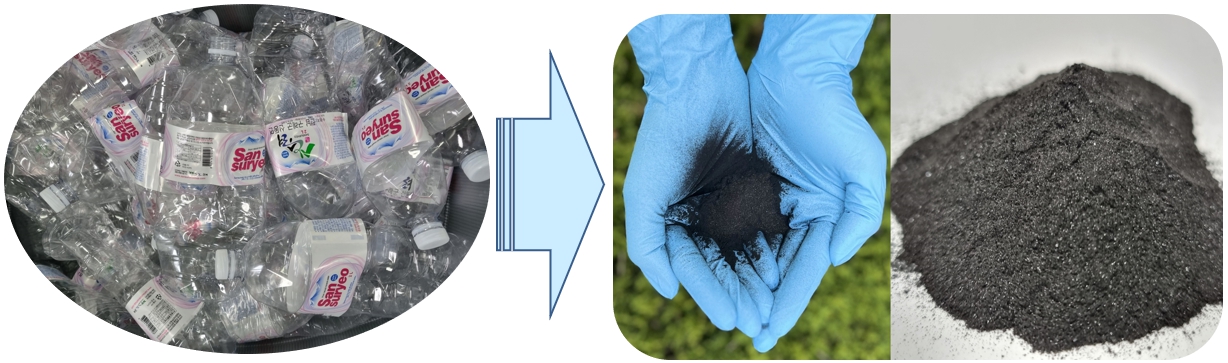
We research environmental catalysts to decompose toxic gases. By upcycling waste PET plastics into high-performance activated carbon catalysts, we tackle air pollution and waste management together.
The Clean Air Making Laboratory (CAML), led by Prof. Jae Hwan Yang at Chungnam National University, specializes in environmental catalysis. Our primary goal is to improve air quality by decomposing and converting hazardous gases from industrial and living environments through catalytic reactions.
Our flagship platform is the upcycling of waste PET plastics. Discarded plastics are transformed into high-performance activated carbon catalysts, simultaneously addressing waste management and air pollution. Building on our experience in radioactive waste treatment at the Korea Atomic Energy Research Institute (KAERI), we also conduct applied research in the nuclear sector.
Multiple branches of toxic gas treatment branch out from a single material platform. Activated carbon derived from waste PET is endowed with catalytic functionalities for selective or complete decomposition.
Oxidizing hydrogen sulfide into elemental sulfur (S) instead of complete combustion, recovering resources while treating odors and corrosion.
Developing catalysts for low-temperature complete combustion of toluene, a representative volatile organic compound, to remove industrial VOCs.
Studying the catalytic oxidation treatment of TEDA used in radioiodine capture for nuclear facilities (KHNP K-Cloud project).
Converting waste PET into porous carbon materials via KOH activation, serving as the common material platform for all our research fields.
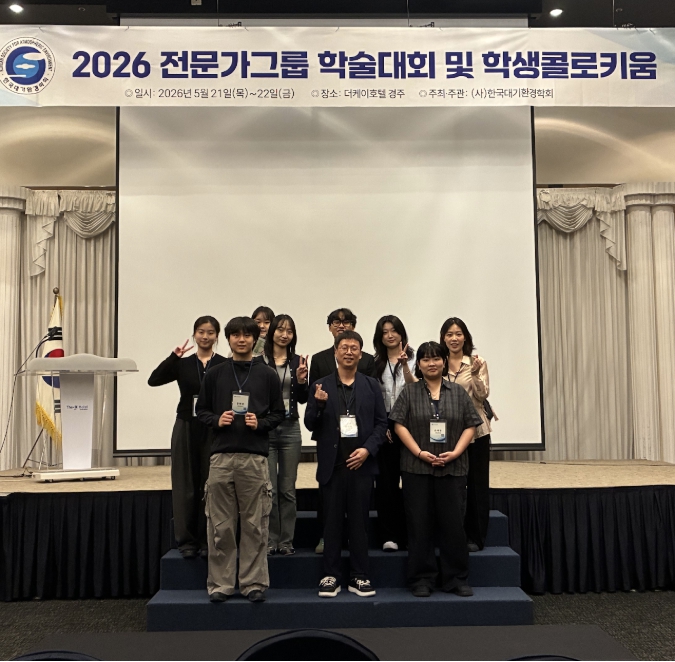
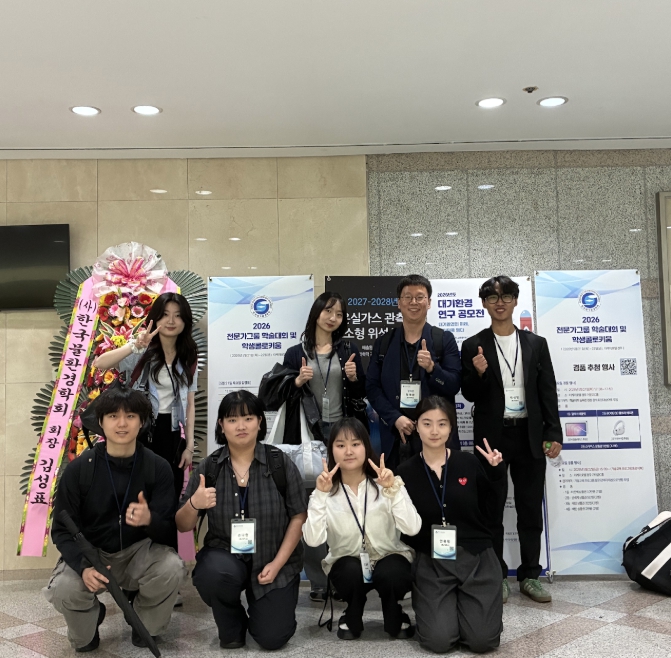
Our professor and graduate researchers experiment, present, and publish together. The next seat is waiting for you.








Regardless of your undergraduate background, we welcome anyone interested in solving environmental challenges through catalysis. We especially encourage inquiries from prospective students from other universities.
Work directly on environmental catalysts addressing carbon neutrality and circular economy. Our clear narrative on waste plastic upcycling ensures high research motivation and publication potential.
Supported by the BK21 FOUR program and national projects with KHNP, KAERI, and other institutions. Financial support (tuition, stipends) will be discussed during interviews.
Our alumni have advanced into environmental and materials sectors like Puresphere, Bluetech, and the Korea Waste Association. Benefit from our strategic location near Daedeok Innopolis.
Build strong skills in experimentation, technical writing, and conference presentation through numerous SCI-level papers and close mentorship.
Send us an email with a brief self-introduction and your research interests. We are always happy to arrange a lab tour and informal chat.
Teaching fundamentals and applications of environmental engineering for undergraduate and graduate students using the Flipped Classroom approach.
Behavior of airborne particulate matter and particulate collection technologies.
Foundational mathematical tools required to solve engineering problems.
Advanced study on the generation and catalytic/adsorption treatment of hazardous gases.
Research achievements published in domestic and international journals. * indicates corresponding author.
“If any of you lacks wisdom, you should ask God, who gives generously to all without finding fault, and it will be given to you.”
— James 1:5